


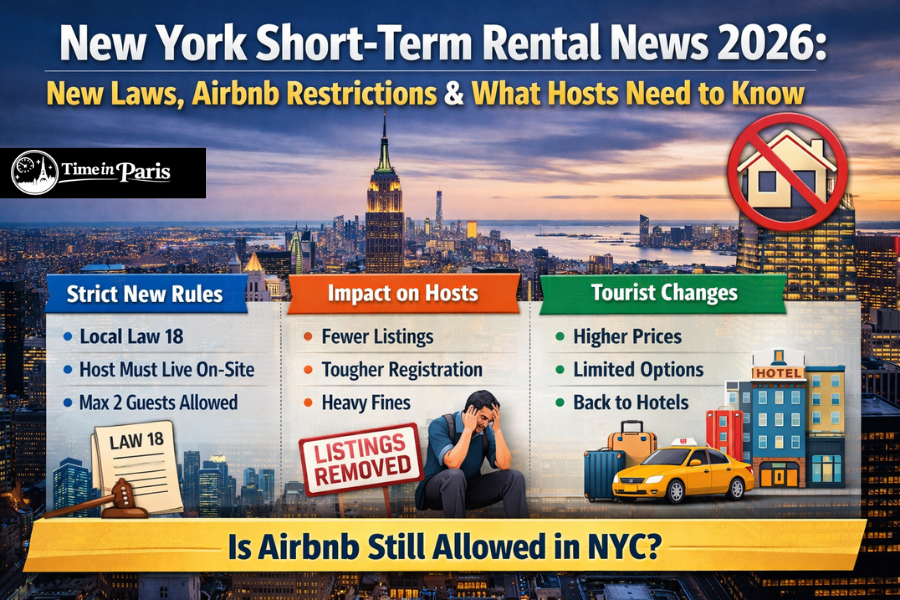
The New York short-term rental market has gone through a major transformation, and in 2026, it’s one of the hottest topics in real estate and travel news. If you’ve been following new york short-term rental news, you’ve probably seen headlines about Airbnb restrictions, new laws, and thousands of listings disappearing almost overnight. What used to be a simple way to earn extra income has now become a tightly regulated system with strict rules and limited flexibility.
For hosts, this shift has created confusion, challenges, and in many cases, lost opportunities. For travelers, it has changed how and where they stay in one of the world’s busiest cities. But beyond the headlines, there’s a deeper story about housing shortages, city control, and the future of short-term rentals. In this article, we’ll break everything down in a simple, real-world way so you can clearly understand what’s happening and what it means for you.
Why Everyone Is Talking About NYC Rentals Again
New York has always had rules around short-term rentals, but for a long time, they weren’t strictly enforced. Many hosts operated in a gray area, and platforms like Airbnb kept growing anyway.
But recently, the city decided that enough was enough.
The housing situation in NYC has been getting worse. Rents are high, apartments are limited, and demand just keeps increasing. From the city’s perspective, short-term rentals were making things harder by taking units off the long-term market.
So instead of small adjustments, they went for a major reset.
That’s why new york short-term rental news in 2026 feels so intense — because it’s not just an update, it’s a complete transformation.
New York Short-Term Rental – Quick Overview (2026)
| Topic | Details |
| Location | New York City, USA |
| Main Law | Local Law 18 |
| Effective Year | Fully enforced by 2023–2026 |
| Applies To | Airbnb, VRBO, and all short-term rental platforms |
| Registration Requirement | Mandatory for all hosts |
| Host Presence Rule | Host must stay in the same unit during guest stay |
| Entire Apartment Rental | Mostly prohibited for short-term stays |
| Guest Limit | Maximum of 2 guests at a time |
| Minimum Stay Rules | Less than 30 days allowed only under strict conditions |
| Enforcement Authority | NYC Office of Special Enforcement (OSE) |
| Penalties | Heavy fines for illegal listings and non-compliance |
| Impact on Listings | Significant drop in active Airbnb listings |
| Effect on Prices | Increase in accommodation costs |
| Main Purpose of Law | Control housing shortage and protect long-term rentals |
| Alternative Options | Hotels, licensed rentals, long-term stays |
| Current Market Trend (2026) | Highly regulated and restricted market |
The Law That Changed Everything
Understanding Local Law 18 (Without the Legal Jargon)
At the center of all this is Local Law 18, and this is where things start getting serious.
Here’s the simple version.
If you want to legally rent your place short-term in New York now, you have to register with the city. Sounds reasonable, right? But that’s just the beginning.
You also need to live in the same apartment while your guests are staying there. Not nearby. Not in another unit. The same apartment.
On top of that, you can only host a small number of guests at once, and you must follow strict safety and building rules.
So basically, the idea of renting out your entire apartment while you’re away — which is what many hosts used to do — is no longer allowed in most situations.
And that one change alone has completely reshaped the market.
What This Means for Everyday Hosts
Let’s talk about real people for a second.
Imagine you’re someone who bought or rented a place in NYC thinking you could earn extra income through Airbnb. Maybe you even built your monthly budget around it.
Now suddenly, you’re told:
You can’t rent the whole place.
You have to stay there with your guests.
And you need official approval just to get started.
That’s a tough adjustment.
A lot of hosts are finding that the effort just isn’t worth the return anymore. The flexibility is gone, and the earning potential is much lower.
I’ve seen discussions where hosts say they feel like the system is pushing them out — and honestly, it’s hard to argue with that.
The Tourist Experience Has Changed Too
It’s not just hosts feeling the impact. Travelers are noticing it as well.
Booking an Airbnb in New York used to be easy. You’d scroll through dozens of options, compare prices, and find something that fits your budget.
Now? It’s a different story.
Listings have dropped significantly. The ones that remain are often more expensive or come with limitations. And there’s always that small worry — is this listing even fully legal?
Because of that, many travelers are going back to hotels, even if it costs a bit more.
In a way, the city has quietly shifted tourism back toward traditional accommodation.
A Small Detail That Actually Matters
One thing that doesn’t get talked about enough in new york short-term rental news is how strict enforcement has become.
This isn’t just a “rule on paper” situation.
The city is actively monitoring listings, and platforms are required to remove unregistered properties. That means if you’re not compliant, you don’t just risk a warning — your listing can disappear completely.
And yes, there are fines involved too.
So trying to “fly under the radar” like before? That’s becoming much harder.
Is There Still Any Opportunity Left?
Here’s the honest answer: yes, but it’s limited.
If you’re someone who lives in your apartment and just wants to rent out a spare room occasionally, you can still do that — as long as you follow the rules.
But if your plan was to run multiple listings or treat Airbnb like a full-time business, New York is no longer friendly to that model.
It’s not impossible, but it’s definitely not easy.
And for many people, it’s simply not worth the hassle anymore.
The Bigger Picture (And Why This Matters Beyond NYC)
What’s happening in New York isn’t just a local issue.
Cities around the world are watching closely.
The same concerns — housing shortages, rising rents, overcrowding — exist in places like London, Paris, and Barcelona. And many of them have already started introducing similar restrictions.
New York just happens to be one of the strictest examples so far.
So when you read new york short-term rental news, you’re not just reading about one city. You’re looking at a trend that could spread much further.
A Bit of Personal Perspective
If I had to sum it up, I’d say this:
New York hasn’t banned short-term rentals — it has redefined them.
The city is basically saying, “If you want to host, you need to be present, responsible, and part of the community.”
From a policy standpoint, that makes sense.
But from a business standpoint, it changes everything.
And whether you agree with it or not really depends on which side you’re on — a resident, a host, or a traveler.
What Should You Do Now?
If you’re thinking about getting into this space, or you’re already in it, this is the time to be careful.
Don’t assume things work the way they used to. They don’t.
Take the time to understand the rules properly. Look at your situation realistically. And most importantly, think long-term.
Because if there’s one thing this whole situation proves, it’s that the short-term rental market can change overnight.
Final Thoughts
The latest new york short-term rental news isn’t just about laws or restrictions — it’s about a shift in how cities manage housing, tourism, and local communities.
New York has drawn a clear line, and it’s not likely to go back anytime soon.
For some people, that’s a good thing. For others, it’s frustrating.
But either way, it’s the new reality.
And if you understand it early, you’ll be in a much better position than most.
FAQs: New York Short-Term Rental News
Is Airbnb completely banned in New York in 2026?
No, Airbnb is not completely banned in New York. However, strict regulations under Local Law 18 mean that most traditional short-term rentals are no longer allowed. Hosts must live in the same property and follow several rules to operate legally.
What is Local Law 18 in New York?
Local Law 18 is a regulation that requires short-term rental hosts to register with the city. It also limits rentals by requiring the host to be present during the stay and restricting the number of guests allowed.
Can I rent out my entire apartment on Airbnb in NYC?
In most cases, no. Renting out an entire apartment for short-term stays is generally prohibited unless you meet very specific conditions. The law mainly allows renting out a room while the host is present.
Why did New York introduce strict short-term rental laws?
The main reason is the housing crisis. The city wants to ensure more apartments are available for long-term residents instead of being used as short-term rentals for tourists.
Are there fines for illegal short-term rentals in NYC?
Yes, there are strict penalties. Hosts who violate the rules can face heavy fines, and their listings may be removed from platforms like Airbnb.
How are tourists affected by these new rules?
Tourists now have fewer Airbnb options, and prices have increased. Many travelers are shifting back to hotels due to limited availability of legal short-term rentals.
Is it still worth becoming a host in New York?
It depends on your situation. If you plan to rent out a spare room while living in the property, it may still be worth it. However, running a full-time Airbnb business is now very difficult.
Are other cities following New York’s example?
Yes, many global cities like London, Paris, and Barcelona are introducing similar regulations. New York is one of the strictest cases, but the trend is spreading worldwide.
