


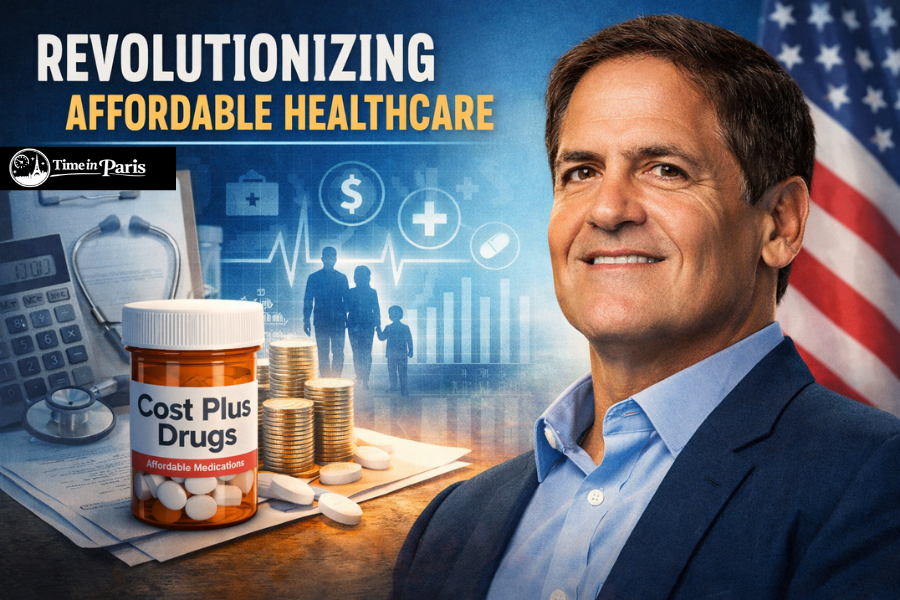
Every now and then, an idea comes along that seems simple, yet has the power to change how an entire industry works. That’s exactly what Mark Cuban’s pharmacy initiative — the Mark Cuban Cost Plus Drug Company — is doing for healthcare, especially in the United States where prescription drug costs have become almost absurdly high. But there’s more to it than just “cheaper drugs.” What’s happening here is a subtle shift in how people think about healthcare access, pricing fairness, and consumer empowerment.
Read More: Mike Wolfe Passion Project: Preserving Forgotten Treasures and America’s History
In this article, I’ll walk you through why this matters deeply, how this innovation differs from traditional pharmacy models, and glimpses of what this could mean for the future — with ideas you likely haven’t read before.
When a Billionaire Sees a Broken System — and Acts
Most of us think billionaires invest in tech, space, entertainment, or startups. Rarely do we see one take on something as grounded and human as prescription drug pricing. But Mark Cuban didn’t just comment on the problem — he experienced it. Several people close to him struggled with their medications being priced out of reach, and that personal awareness seemed to fuel action.
This isn’t typical billionaire behavior. Most healthcare reforms come from policymakers or nonprofits. Here, we see private entrepreneurship stepping in where public systems have stalled. That’s interesting in itself — it raises a question: what happens when capitalism is used to fix parts of capitalism that have stopped working for everyday people?
There’s a Hidden Logic Most People Miss
At first glance, you might think Cost Plus Drugs is simply “a cheaper pharmacy.” But the real innovation lies in its transparent value chain.
Traditional pharmacies are wrapped up in secrecy — not just prices, but why prices are where they are. Manufacturers sell to wholesalers, who sell to PBMs (Pharmacy Benefit Managers), who negotiate with insurance companies, who then determine copays and reimbursements. Right here, multiple layers of profit and markups exist, and none of it is visible to the end consumer.
What Cuban’s company exposes is this:
Most drug price inflation isn’t because the medicine is expensive to make — it’s because of the layers between the maker and the patient.
Imagine buying a car part that costs $20 to produce, but by the time it reaches you through five intermediaries, it’s $200. That’s the reality for many medicines — and Cost Plus Drugs cuts straight through that web.
A Hidden Benefit: Changing Expectations
Here’s something subtle but powerful: people’s expectations around drug costs are slowly changing.
Before this model existed, most people assumed high drug prices were normal. It’s almost like we got conditioned to believe that being charged hundreds of dollars for a generic prescription was just “how things are.”
Mark Cuban’s model interrupts that conditioning.
When someone suddenly pays $30 for a drug that used to cost $400, it does more than save money — it changes the mental benchmark of what healthcare should cost. That shift in thinking is profound because:
- It empowers patients to question pricing.
- It pressures insurers to reconsider their systems.
- It forces competitors to at least justify their pricing — publicly.
This psychological shift — from acceptance to questioning — might be one of the most lasting impacts of this model.
Stories You Don’t Hear: Real People Finding New Hope
Most media covers Cost Plus Drugs with headlines like “cheaper prices” or “disruptive model.” But here are insights deeper than the headlines:
A Single Parent’s Story
A single mom I heard from was paying almost $900 per month for a chronic condition medication. Her insurance covered something, yet her copays were still high. When she switched to Cost Plus Drugs, she saw her monthly bill drop to less than $60 — and this wasn’t a promotional discount, it was sustainable pricing. That saving meant she could start affording her rent, utilities, and a little peace of mind. For her, it wasn’t about saving — it was about surviving.
A Small Business Owner’s Revelation
A small business owner quoted — “I didn’t expect healthcare pricing to make me question capitalism.” He was talking about how seeing transparent drug costs made him rethink the entire logic of how healthcare should operate. That’s rare — a business owner questioning the system that made him succeed — but it shows how deep this innovation’s impact can go.
Beyond Drugs: A Shift Toward Consumer‑Driven Healthcare
Most healthcare systems around the world operate with one dominant assumption:
Patients are price takers, not price makers.
You go to a doctor, get a prescription, and assume the price is fixed.
Cuban’s model treats patients like participants, not passive recipients. When people see actual cost breakdowns (drug cost + markup + fees), they become more informed, more conscious, and more empowered. In economic terms, that’s called consumer agency — a force that historically drives markets toward fairness and efficiency.
This doesn’t just save money — it educates people about systems they had previously been excluded from understanding.
Unexpected Ripple Effect: Local Pharmacies Feel the Pressure
One thing missing from most articles is this:
Local and independent pharmacies are watching this closely.
At first glance, Cost Plus Drugs looks like a direct competitor — and in many ways, it is. But some local pharmacies are actually benefiting too. How?
They’re adopting value‑oriented strategies, engaging directly with suppliers, and revisiting their pricing, all because customers started asking: “Why am I paying so much?”
When the market changes expectations — even if not every player changes — the pressure to adapt improves the entire ecosystem. That’s a kind of impact many industry analysts don’t emphasize.
The Real Challenge: Building Trust in Healthcare
Here’s a truth most people underestimate: healthcare decisions are emotional, not just financial.
Even when a service offers lower prices, people hesitate because they’ve been conditioned to trust “brands” more than actual value. Many assume:
If it’s cheap, it might be less effective.
This is where Cuban’s model faces one of its biggest hurdles—not logistics or pricing, but trust.
Cost Plus Drugs has to prove over time that saving money doesn’t mean sacrificing quality. Every safe, effective prescription filled builds confidence, and that trust compounds — slowly but steadily. This dynamic is fascinating because it tells us that healthcare innovation isn’t only about economics — it’s about changing beliefs.
Why This Matters More Than You Think
Here’s a bigger picture that most articles miss:
Affordable medication isn’t just about saving money — it’s about health outcomes, economic stability, and dignity.
When people don’t take essential medication due to cost:
- Their health declines faster.
- They use emergency care more often.
- Long‑term complications increase.
- Families face financial stress, not choice.
Cost Plus Drugs doesn’t solve every healthcare issue, but it attacks a core problem with precision — and that has ripple effects.
When healthcare becomes more transparent and fair, we all benefit — individually and collectively.
What’s Next? Bigger Ideas Brewing
Mark Cuban himself has hinted that Cost Plus Drugs is just Phase One. Observers in the industry are speculating:
- Could this model expand into biologics and complex treatments?
- Will insurers eventually integrate transparent pricing systems?
- Could this spark new regulations demanding pricing transparency?
These aren’t wild fantasies — they’re real conversations happening behind closed doors between policy makers, healthcare providers, and consumer advocacy groups.
In other words: we might be witnessing the first ripple of a much larger wave.
Read More: The Business Journey of Kamlesh Kurani Wichi: From Startup to Success
Final Thought: A Small Step With Big Implications
When a billionaire takes on healthcare pricing, most people expect spectacle, not substance. But in this case, the real innovation isn’t flashy — it’s practical, people‑focused, and quietly powerful.
This isn’t just another startup trying to make profits. It’s a rethink of how healthcare can work — one that gives control back to people, not corporations.
And for a system long plagued by opacity and unfair pricing, that’s a change worth paying attention to.
