


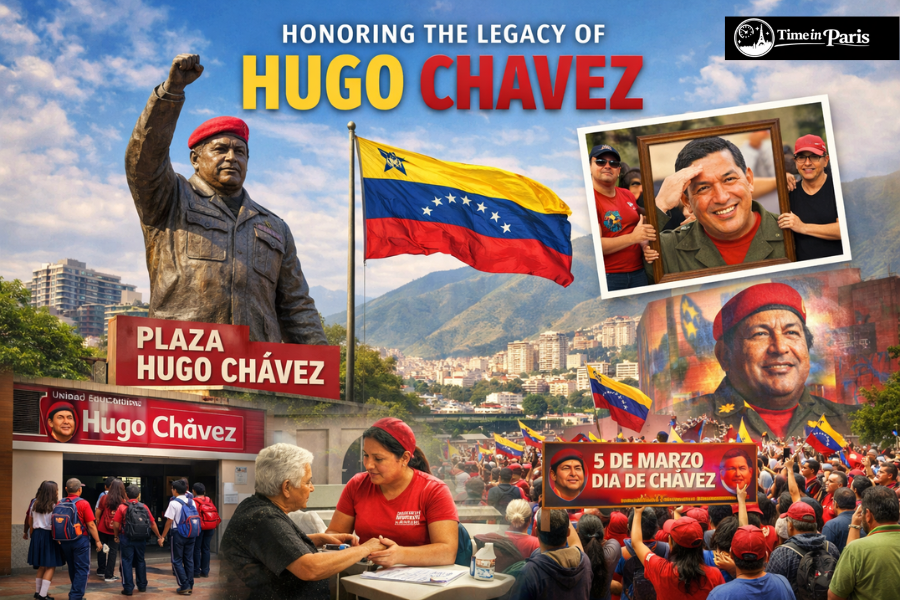
Hugo Chávez, Venezuela’s charismatic and controversial leader, left an indelible mark on his country and the world. Even years after his death in 2013, his legacy continues to shape Venezuelan politics, culture, and society. From monuments and national holidays to social programs and international recognition, Chávez’s influence is remembered in a variety of meaningful ways. But how exactly is his legacy honored today? Let’s take a closer look.
Read More: How I Attended an All-Guy’s Mixer Chapter 64 – My Experience
Remembering Chávez Through Monuments and Statues
One of the most visible ways Chávez is honored is through monuments and statues across Venezuela. From Caracas to smaller towns, public squares often feature his likeness, serving as a daily reminder of his leadership. These statues aren’t just artistic tributes; they are meant to symbolize the ideals Chávez promoted, such as social justice, equality, and national pride.
For instance, the Plaza Hugo Chávez in the capital is a popular gathering spot for people to reflect on his contributions. Visitors often leave flowers or take photos near these monuments, blending personal remembrance with a sense of national identity. It’s fascinating how public art can keep a political figure alive in collective memory, long after they are gone.
National Holidays and Commemorative Events
Chávez’s legacy is also honored through official national holidays and commemorative events. The Venezuelan government declared March 5th, the anniversary of Chávez’s death, a day of remembrance. On this day, ceremonies are held in schools, government offices, and public squares. People often gather to discuss his achievements, watch documentaries, and participate in cultural events that celebrate the Bolivarian Revolution he championed.
Beyond official holidays, local communities sometimes organize smaller events, such as educational talks or cultural performances. These events not only remember Chávez as a political leader but also highlight the social changes he brought to the country. It’s a mix of celebration and reflection, creating a living legacy rather than just a historical memory.
Social Programs That Carry His Name
One of the most enduring aspects of Chávez’s legacy is the social programs he initiated, often referred to as the Bolivarian Missions. These initiatives aimed to improve education, healthcare, housing, and food security for Venezuela’s poorest citizens. Programs like Misión Barrio Adentro, which brought healthcare to underserved communities, and Misión Robinson, focused on literacy and education, are still operational today.
These programs serve as daily reminders of Chávez’s vision for a more equitable society. For many Venezuelans, participating in or benefiting from these programs is a personal connection to his legacy. It’s one thing to see a statue or attend a ceremony, but another to experience the practical impacts of his policies in everyday life.
Schools and Institutions Bearing His Name
Chávez’s influence extends into education and civic institutions. Numerous schools, universities, and community centers are named after him, ensuring that younger generations encounter his name and story regularly. Naming schools after Chávez isn’t just symbolic; it also embeds the values he promoted into the educational experience.
For example, students attending Unidad Educativa Hugo Chávez might learn about his social programs, leadership style, and political philosophy. This creates a unique blend of history and civic education, showing how legacy can influence the mindset and aspirations of young citizens.
Read More: What is a County Integrated Development Plan (CIDP)? Complete Guide with Examples
Media and Cultural Tributes
Chávez’s presence is also kept alive through media and cultural productions. Documentaries, books, and films continue to explore his life, political strategies, and social initiatives. Some TV programs and radio shows host debates and discussions about his impact, sparking conversations that are both nostalgic and critical.
Artists and musicians sometimes reference Chávez in their works, adding another layer of remembrance that’s less formal but equally powerful. It’s a reminder that legacy isn’t only maintained by governments; culture and media play a significant role in keeping memories vivid and relevant.
International Recognition and Influence
Interestingly, Chávez’s legacy extends beyond Venezuela. Internationally, he is remembered for his outspoken stance against global inequality and his efforts to build alliances with other countries in Latin America, Africa, and beyond. Some international organizations, solidarity groups, and political movements continue to cite his policies and speeches as inspiration.
For example, events commemorating Latin American unity or anti-imperialist movements often reference Chávez’s work. Even though his politics were polarizing, his name has become symbolic of a certain vision for social justice and regional cooperation.
Personal Reflections and Public Opinion
Of course, Chávez’s legacy is not without controversy. Opinions about him vary widely, both within Venezuela and internationally. Yet, one thing is clear: his influence is still felt. Personally, I find it remarkable how a single leader’s ideas can continue to shape public life long after their death. Whether people agree or disagree with his methods, the fact that his name appears on schools, monuments, and programs shows a kind of lasting imprint on society that few leaders achieve.
Walking through Caracas or other Venezuelan cities today, you can sense this living legacy. Statues, murals, and programs all remind citizens that history isn’t just in books—it’s part of everyday life. For many, honoring Chávez isn’t only about politics; it’s about memory, identity, and hope for a better future.
Read More: How Mark Cuban Pharmacy Innovation Is Quietly Transforming Affordable Healthcare in Real Ways
Conclusion: A Legacy That Lives On
So, how is Chávez’s legacy honored today? Through a combination of monuments, national holidays, social programs, schools, cultural productions, and international recognition, his influence continues to permeate Venezuelan society. More than just a political figure, Chávez has become a symbol—sometimes revered, sometimes debated—but always remembered.
The way he is honored reflects both his accomplishments and the aspirations he inspired in countless people. Even years after his passing, Chávez’s legacy remains alive, shaping communities, policies, and conversations. And perhaps that is the most enduring tribute of all: a legacy that continues to interact with the world, long after the person who started it is gone.
